You're Already Using AI (You Just Don't Know It)
Here's something most people don't realize: AI isn't coming. It's already here. It's been here for years.
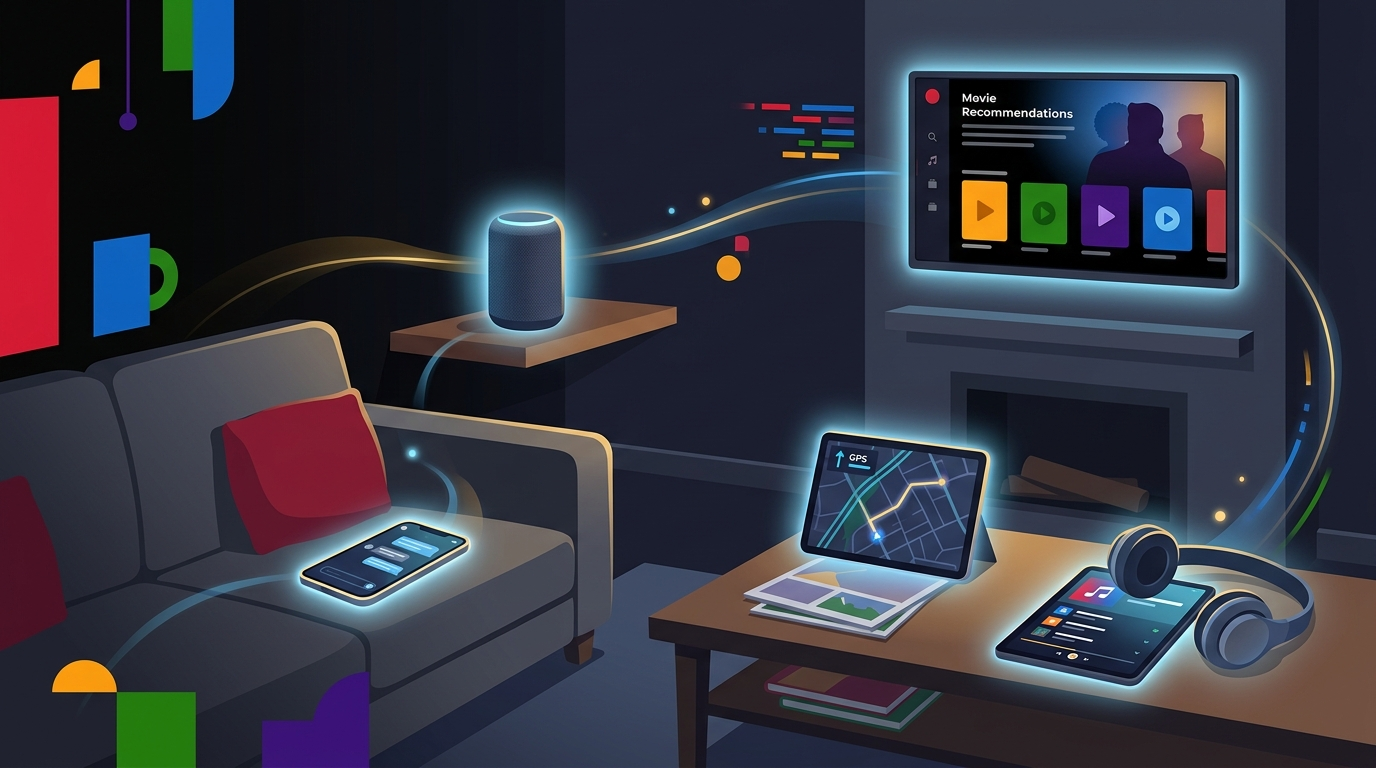
It's in your pocket. In your living room. In your bank account. In the app you used this morning before you finished your coffee.
You've been using AI every single day — you just weren't calling it that.
The AI You're Already Living With
No, really. Go through a normal day:
You wake up and check your phone. Your email app has already sorted the spam away from the real stuff — AI did that. You open Netflix. The show it's suggesting is actually something you'd probably like — AI figured that out. You unlock your phone with your face — AI is recognizing you in real time. You ask your phone for directions and it estimates you'll arrive in 22 minutes — AI analyzed current traffic patterns and predicted that.
You haven't even had breakfast and you've already used AI four times.
Click through these to see how each one works:
So Why Does It Feel New?
Because consumer AI — the stuff that writes essays and answers questions and makes images from descriptions — is new. Or at least, newly accessible to regular people.
The AI in your spam filter was always invisible. It did its job silently in the background, and you never had to think about it.
The AI in ChatGPT is visible. You talk to it. It talks back. It feels like a conversation. That's a genuinely new thing — and it's why it feels like AI just arrived.
But the fundamentals aren't new. The technology has been quietly running in the background of your daily life for years.
AI or Not AI? Let's Find Out.
Sort each of these into 'AI' or 'Not AI (just regular software)'
A calculator giving you the answer to 847 × 23
Spotify's Discover Weekly playlist, updated every Monday with songs you haven't heard
A website showing you items from your shopping cart when you come back
Your phone keyboard suggesting the next word as you type
A traffic light that changes on a fixed timer
A traffic light that changes based on how many cars are waiting
What This Means for You
Here's the real point of this lesson:
AI isn't something that's happening to you. It's already something you're living with, and mostly it's making your life easier without you having to do anything.
The part that's changing is that now you can use it yourself. Not just passively receive its outputs — actually direct it, talk to it, put it to work on your actual problems.
That shift — from AI-as-background-service to AI-as-tool-you-use — is what this whole course is about.
And now that you understand what it is, you're ready to actually use it.
Quick Check
Quick Check
5 questions · Earn points for speed!
🔀 Random selection — different questions each play!
Key Takeaway
AI has been running quietly in the background of your daily life for years. What's new is that now you can use it yourself — on your own terms, for your own problems.
Module Complete!
You just finished Module 1: What AI Actually Is.
Here's what you now know that most people don't:
- AI is pattern prediction, not magic or robot thinking
- There's a real difference between automation (rules) and AI (judgment)
- ChatGPT predicts text like a very well-read parrot — impressive, but not infallible
- AI has been living in your phone, your inbox, and your streaming apps for years
Up next: Module 2 — AI at Work. Real-world use cases explained in plain English — no buzzwords, no hype.
Ready to complete this lesson?
You've reached the end! Hit the button below to earn your XP.