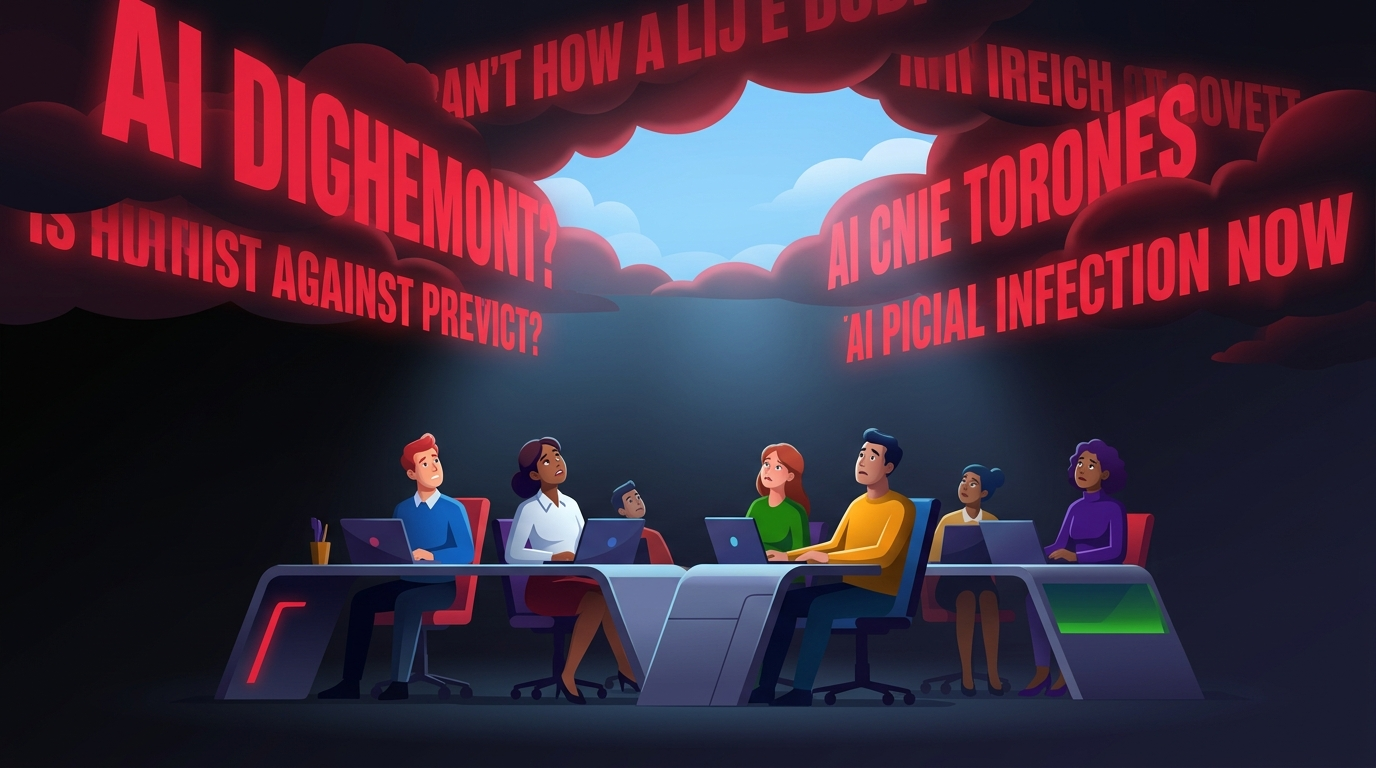
Let's start with honesty: if AI makes you nervous, you're in the majority. Not a slim majority either. The data is overwhelming.
0%
of workers are worried about AI's impact in the workplace (Pew Research, 2024)
0%
of employees are concerned AI will make their job obsolete (EY, 2024)
That's not a fringe feeling. That's three out of four people at your office, your restaurant, your hospital. The fear is real. But here's the thing — most of it is based on bad information, not bad instincts.
What People Actually Think
The numbers get more specific when you dig in, and they tell an interesting story.
0%
of employees are anxious AI will replace their specific job (EY, 2024)
0%
of US adults are more concerned than excited about AI (Pew Research, 2024)
So more than half the country leans worried rather than hopeful. That's not irrational — it's a normal response to something powerful that you don't fully understand yet. Nobody panics about a hammer. People panic about things that feel unpredictable.
Tip
If you're reading this and thinking "yeah, that's me" — good. That means your instincts are working. The goal isn't to stop being cautious. It's to aim your caution at the right things.
The Generation Gap Nobody Talks About
Here's something that surprises most people: younger workers aren't automatically more comfortable with AI. In fact, the relationship between age and AI anxiety is more complicated than "old people are scared, young people love it."
0%
of adults 65+ have negative feelings about AI's growing role in daily life
0%
of adults under 34 have negative feelings about AI's growing role
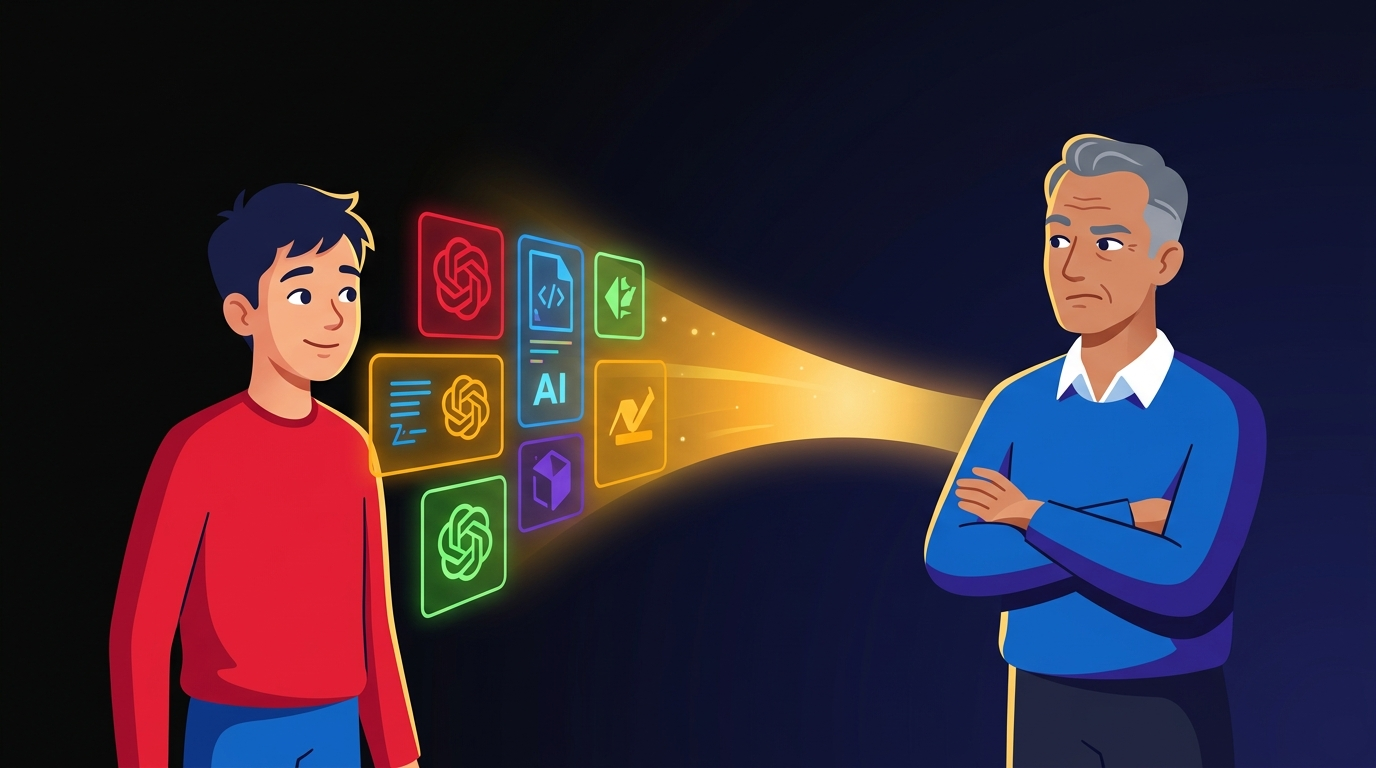
That gap makes sense — older adults have seen more technology changes and know that promises of "this will help everyone" don't always land that way.
But here's the twist: Gen Z workers are actually less likely to use AI at work than Millennials. Not because they can't figure it out — they grew up with this stuff. It's because they're more skeptical of the hype than people give them credit for. They've watched tech companies overpromise their entire lives.
Warning
Don't assume someone's comfort with AI based on their age. A 60-year-old small business owner using ChatGPT daily is more common than you'd think. A 22-year-old who refuses to touch it is equally common.
The 39-Point Gulf
This is the stat that should make you stop and think.
When Pew asked the general public whether AI will have a positive impact over the next 20 years, only 17% said yes. When they asked AI researchers and experts the same question, 56% said positive.
That's a 39-point gap between the people building AI and the people affected by it.
?Why are experts more optimistic?
Tap to reveal→
✓Why are experts more optimistic?
AI researchers see the daily reality of what the technology can and can't do. They know its limits. They see incremental progress, not Hollywood-style revolution. They're optimistic because they know the ceiling — while the public mostly sees the scary headlines without the context.
← Tap to flip back
?Why is the public more worried?
Tap to reveal→
✓Why is the public more worried?
Most people encounter AI through news headlines, social media posts, and vendor pitches — all of which have financial incentives to exaggerate. Without hands-on experience, it's rational to fear the worst. The information gap drives the anxiety gap.
← Tap to flip back
?Who's right?
Tap to reveal→
✓Who's right?
Probably somewhere in the middle. Experts tend to underestimate disruption to people unlike them (factory workers, service workers, entry-level employees). The public tends to overestimate how fast change actually happens. Both sides have blind spots.
← Tap to flip back
The Stat That Changes Everything
Out of all the numbers in this lesson, this is the one worth remembering:
0%
of workers say more training and education would make them comfortable with AI (EY, 2024)
Read that again. Four out of five people who are worried say the fix isn't "stop AI" — it's "help me understand it." That's not a technology problem. That's an education problem. And it has a solution.
The fear isn't coming from a place of "AI is evil." It's coming from a place of "nobody's explained this to me, and I feel left behind." That's fixable. That's literally what you're doing right now by being in this course.
Tip
You are currently part of the solution to your own AI anxiety. The act of learning — even casually — puts you ahead of the 80% who want training but haven't gotten it yet.
Separating Real Concerns from Hype
Not all AI fears are equal. Some are grounded in reality. Others are science fiction dressed up as news. Let's sort them.
?REAL: Some tasks will be automated
Tap to reveal→
✓REAL: Some tasks will be automated
Data entry, basic customer service scripts, simple report generation, scheduling — these are already being automated. The jobs that involve these tasks will change. This is real and happening now.
← Tap to flip back
?REAL: Transition periods are painful
Tap to reveal→
✓REAL: Transition periods are painful
Even when AI creates more jobs than it destroys (which has historically been true of major technology shifts), the people who lose the old jobs aren't always the people who get the new ones. That gap is real and deserves attention, not dismissal.
← Tap to flip back
?HYPE: AI will replace most jobs within 5 years
Tap to reveal→
✓HYPE: AI will replace most jobs within 5 years
Every major technology — the internet, smartphones, cloud computing — was predicted to destroy massive numbers of jobs within 5 years. Every time, the timeline was wildly wrong. Jobs changed. New ones appeared. The transition took decades, not years.
← Tap to flip back
?HYPE: If you don't learn AI right now you'll be unemployable
Tap to reveal→
✓HYPE: If you don't learn AI right now you'll be unemployable
This is a marketing line used to sell AI courses, certifications, and tools. Urgency sells. The reality is that AI literacy will matter increasingly over the next decade — but you're not going to wake up unemployable because you didn't take a bootcamp this month.
← Tap to flip back
?REAL: Companies will use AI as an excuse to cut jobs
Tap to reveal→
✓REAL: Companies will use AI as an excuse to cut jobs
This one is real and already happening. Some companies announce AI initiatives specifically to justify layoffs they were already planning. The AI didn't replace those workers — the budget decision did. Being able to tell the difference matters.
← Tap to flip back
Quick Check
▲
◆
●
■
Quick Check
5 questions · Earn points for speed!
🔀 Random selection — different questions each play!
▲
◆
●
■
Key Takeaway
The fear of AI is widespread, real, and completely understandable. But 80% of people who are worried say the fix is education, not elimination. Learning what AI actually does — which is what you're doing right now — is the single most effective thing you can do about the anxiety. The fear is valid. The hopelessness isn't.
🎓
Ready to complete this lesson?
You've reached the end! Hit the button below to earn your XP.