What AI Is Actually Bad At
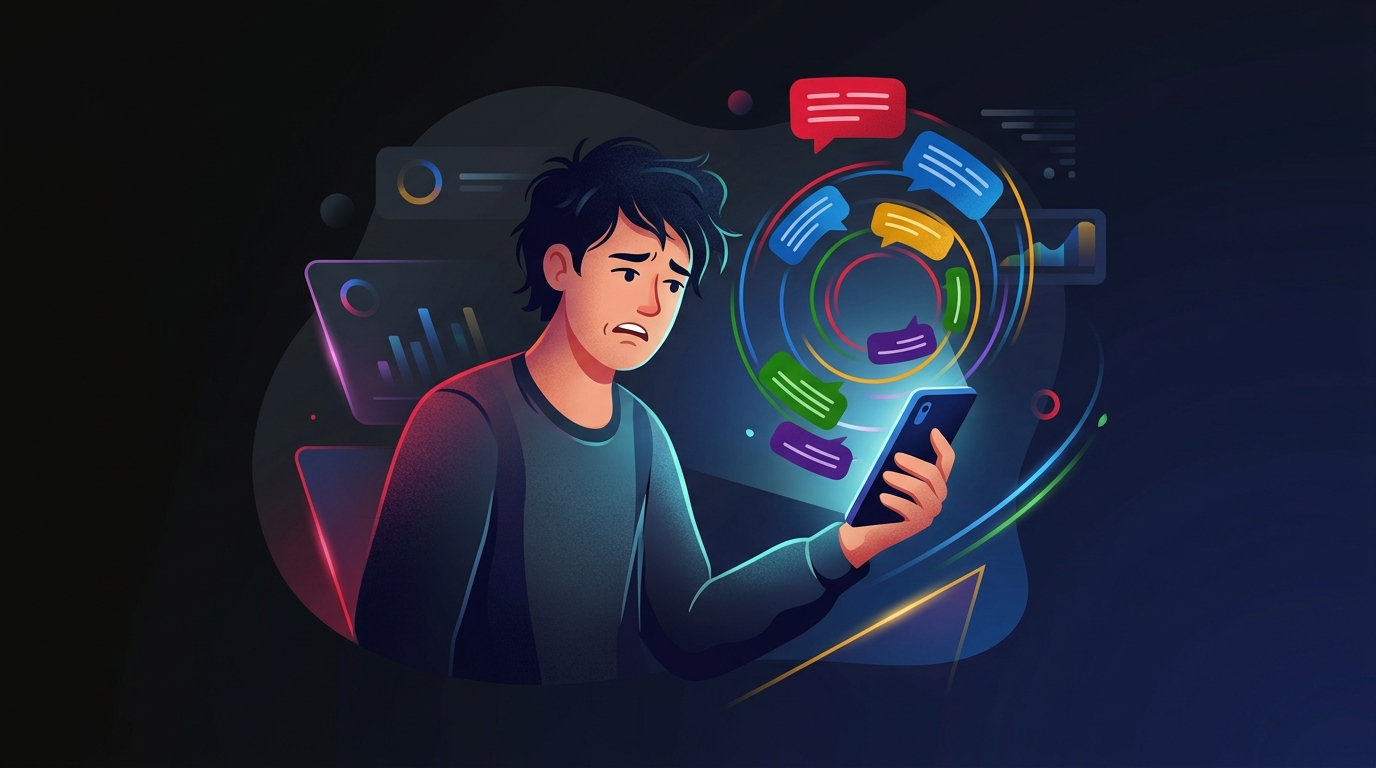
If AI customer service has ever made you want to throw your phone across the room, you are not alone. Not even close.
This isn't about being a technophobe. This is about real, documented, measurable failures that affect millions of people every day. The data on this is brutal — and knowing it puts you in a much stronger position than the people who just accept whatever companies throw at them.
People Overwhelmingly Prefer Humans
This isn't a guess. It's one of the most replicated findings in recent consumer research.
And here's the one that should make every business executive sit up straight:
More than half. They won't just complain. They'll leave.
This isn't irrational fear. People have tried these systems. They've been stuck in loops, given wrong answers, and denied the ability to talk to a real person. The preference for humans isn't nostalgia — it's earned through bad experiences.
The Chatbot Frustration Loop
You know this feeling. You type your problem. The bot gives you a generic answer. You try again, more specific this time. The bot gives you the same answer with different words. You ask for a human. The bot asks you to describe your issue first. You already did. Three times.
The research confirms exactly what you've experienced:
The Satisfaction Gap Is Enormous
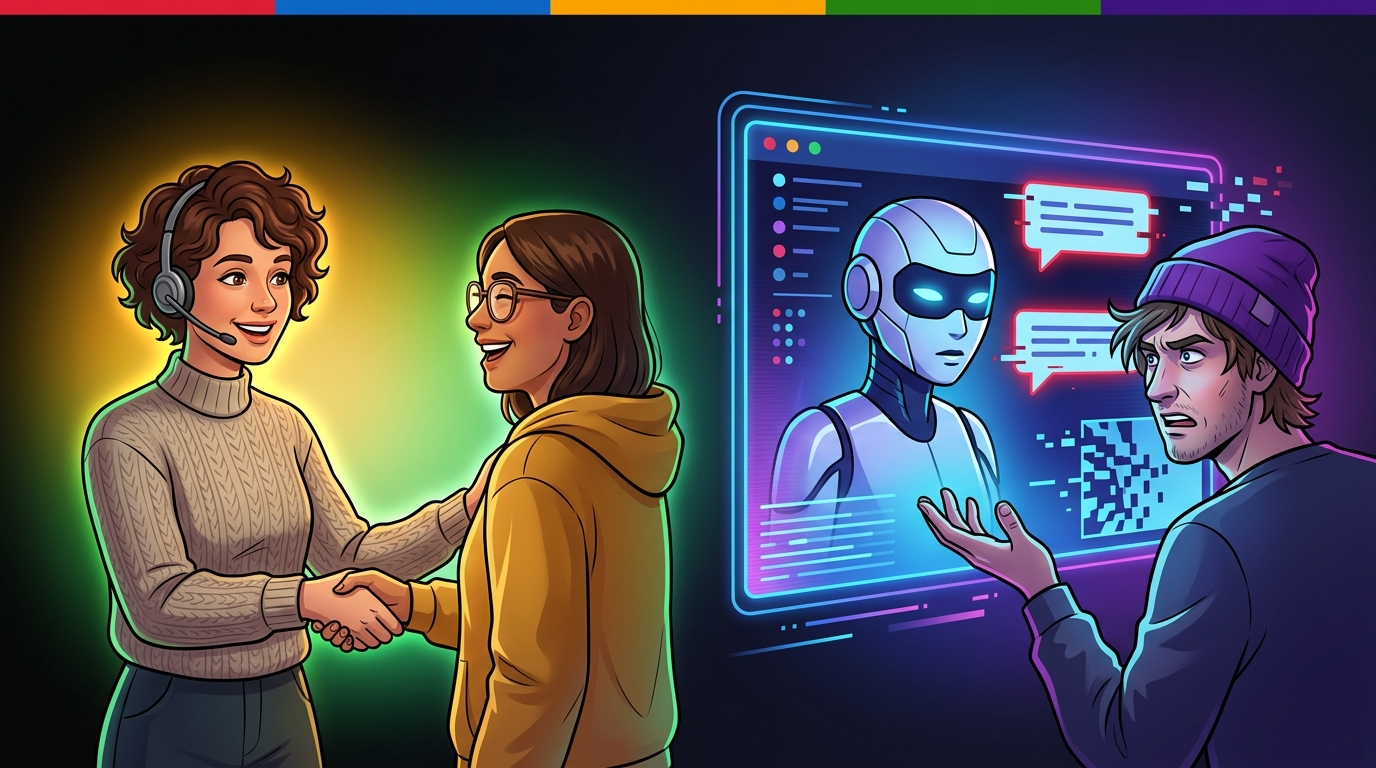
Net Promoter Score (NPS) measures how likely someone is to recommend a service. It's one of the most widely used customer satisfaction metrics in business. The scale runs from -100 to +100.
Seventy-two points. On a 200-point scale. That's not a gap — that's a canyon.
To put this in perspective: the difference between the most loved brands in the world and the most hated ones is typically around 50-60 NPS points. The gap between humans and chatbots is bigger than that.
This tells you something important about where the technology actually is. AI chatbots don't just underperform humans. They underperform humans by a margin that would be considered catastrophic in any other area of business.
The Hallucination Problem Has a Price Tag
AI doesn't just get frustrated customers stuck in loops. It also makes things up. Confidently. Fluently. In perfect grammar.
That's not a hypothetical number. That's real money lost because AI systems generated false information that people acted on. Wrong product specifications. Fabricated legal citations. Incorrect financial data. Medical misinformation.
The scariest part of AI hallucination isn't that it gets things wrong. It's that it gets things wrong while sounding completely right. There's no stutter, no hedging, no 'I'm not sure about this.' The wrong answer sounds exactly like the right answer.
You Can't Even Tell When It's AI
Here's where it gets really uncomfortable.
Think about what these numbers mean together. Most people can't tell when they're interacting with AI. Most people can't spot AI-generated content. And most people are worried about AI-generated misinformation.
That's a perfect storm. You're worried about something you can't detect, produced by a system that sounds authoritative whether it's right or wrong.
This is why healthy skepticism isn't paranoia — it's a survival skill. If you can't tell when you're talking to AI, and AI sometimes makes things up, then verifying important information isn't being difficult. It's being smart.
Where AI Actually Fails (The Pattern)
The failures aren't random. They cluster around specific kinds of tasks:
Anything requiring empathy. AI can simulate empathetic language. It cannot actually understand what you're feeling. When you're upset about a billing error and the bot says "I understand your frustration" for the third time while doing nothing to fix it — that's not empathy. That's a script.
Anything requiring judgment about unusual situations. AI works from patterns. When your situation doesn't match a pattern — and real human problems usually don't — the system breaks down. It either gives you a generic answer or loops back to the same decision tree.
Anything where being wrong has real consequences. Medical advice. Legal information. Financial decisions. Technical troubleshooting on expensive equipment. These are exactly the areas where people most want AI to help — and exactly the areas where hallucination is most dangerous.
Anything requiring the ability to say "I don't know." AI almost never says this. It will generate an answer to virtually any question, regardless of whether it actually has the information to answer correctly. That's a design feature, not a bug — and it's one of the most dangerous features in the technology.
Quick Check
Quick Check
5 questions · Earn points for speed!
🔀 Random selection — different questions each play!
Key Takeaway
AI fails hardest where humans need help most: customer service, empathy, accuracy under pressure, and knowing when to say "I don't know." The 90% who prefer humans aren't wrong — they're paying attention. Knowing where AI breaks isn't pessimism. It's the skill that keeps you from being the person who trusts a confident wrong answer.
Ready to complete this lesson?
You've reached the end! Hit the button below to earn your XP.